




Living with it
Maintenance, touch-ups, and how limewash changes
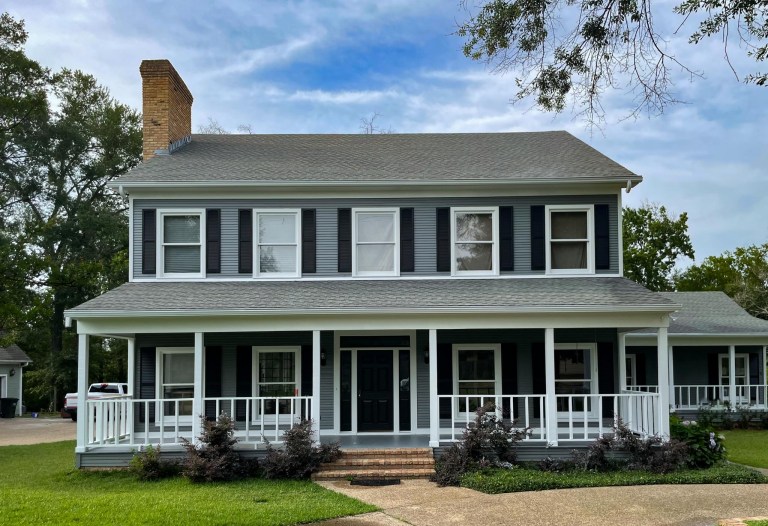
Classico Limewash is formulated to patina. Romabio says rain and water exposure play the biggest role in how the finish ages and how much masonry eventually shows through again. That weathering is the point of the product for many homeowners, and it is also the reason Romabio does not attach a product warranty to Classico Limewash: it is unknown how the finish will change in your weather. Romabio adds that there is no need to repaint unless you want a different look.
Touch-ups are part of normal care, not a sign the job failed. Because the finish is extremely flat, Romabio says touch-ups can be done at any time: re-wet the dried area and reapply, often at a greater dilution so the new limewash does not stand out. Routine cleaning, when it is needed, should be gentle — mild detergent and water. Romabio advises against harsh chemicals, pressurized water, or abrasives on the finished surface.
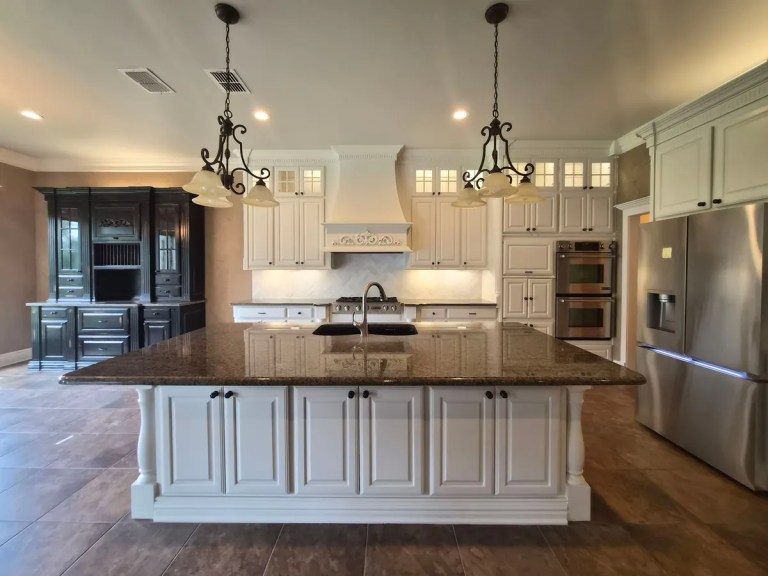
If you like the freshly applied look and want to slow the weathering, Romabio Mineral Shield is an invisible, breathable topcoat that repels liquid water but still allows vapor to pass. The data sheet recommends it on the bottom few feet of a house (rain splash and soil staining), on sills and ledges, around hose bibs and downspouts, and on walls without an overhang. It goes on a dry surface at least 48 hours after painting. Mineral Shield can also be used on interior masonry that is touched often or cleaned often, such as a hearth or a backsplash, to reduce chalking.
If what you actually want is a solid, full-coverage painted brick that is not meant to wear back, say so at the estimate visit. Romabio points those projects toward its Masonry Flat or Masonry Textured paints, which are a different system. We can also talk through a conventional exterior painting approach where that is the better fit.
Where limewash is a strong choice
- It bonds into porous masonry by carbonation rather than forming a plastic film on top, and Romabio says it will not chip, peel, or flake.
- The finish is breathable and can be distressed so the original brick still has a voice in the design.
- On qualifying masonry it is typically a one-coat process, with a short window afterward to wash the look back or even remove it from most brick.
- Touch-ups can be blended later, and the color range is well suited to the soft whites and neutrals most people want on brick.
- Romabio’s data sheet lists VOC at 3.9 g/l, which is a low figure for a ready-to-use coating.
Where it is the wrong product, or a harder one
- Painted, sealed, glazed, or non-absorbent brick needs MicroGrip Primer, and a primed surface cannot be distressed into the classic washed-off look.
- It is not for floors, driveways, steps, or other horizontal, foot-traffic surfaces, and it is not a stain-blocking paint.
- The finish is designed to keep changing. There is no Romabio product warranty, and East Texas rain will be part of how it weathers.
- Application is weather-sensitive: 50°F to 88°F, a damp wall, no heavy rain in the first 12 to 24 hours, and no flash drying in hot sun.
- Colors stay in the light to medium-light range, and the wet color is a poor guide to the dry one. The wet product is also caustic, which is why it is a crew-applied coating.
